You can subscribe to this blog

Showing posts with label Seeds. Show all posts

Sunday, September 29, 2013

Violent Violas


You'd never imagine that flowers with such 'cute little faces' could be capable of such violence ......
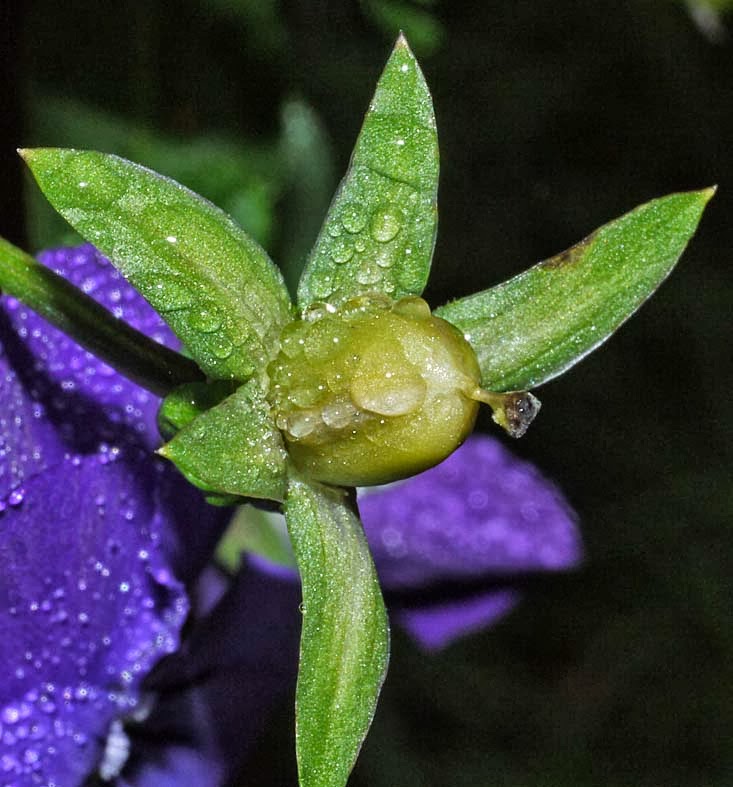

....... after the flowers of most  members of the Violaceae, including violets, pansies and violas, have been pollinated the seeds develop inside a capsule .....


...... which splits into three segments when it ripens, then as the walls of the split capsule segments dry out they curl inwards, squeezing the rows of slippery seeds .....


....... until they fire them out, like a bar of soap slipping out of your wet hands in the shower.


This photograph was taken a couple of seconds after the one above and during that time the capsule fired out three of the six seeds in that segment that points to 11 o'clock. Two of the seeds hit the lens filter with an audible ping and the third hit me square in the forehead.

No wonder 'volunteer' violas and violets germinate all over our garden.............


Wednesday, September 8, 2010

Seeds

Since this is the time of year when most plants in my part of the world are setting seeds, I thought I'd post a few images of these wonderful objects. This is one of the ripening seeds from my runner beans Phaseolus coccineus, with the testa and one of the cotyledons removed, revealing the embryonic plant inside. The cotyledons contain the store of proteins, carbohydrates and lipids that will provide sustanance for the germinating seedling until its first true leaves unfurl and begin to photosynthesise. In this image you can see that the rudiments of the venation in those first true leaves, that will transport sugars to other part of the young seedling, have already formed in the embryo. The embryo is attached to the cotyledons at its hypocotyl and the embryonic root points downwards and to the left. 


There's a heavy crop of oak (Quercus spp.) acorns in this part of Durham this year - it's a mast year. Oak acorns - technically nuts - germinate soon after they fall to the ground, anchoring themselves via their root but then suspending further growth until spring, when the shoot forms. If you are planning to plant oak trees, it's best to sow the fresh acorns soon after they fall.


Once seeds germinate their root needs to spear into the soil quickly, driven by the hydraulic force inside expanding cells. Here you can see the glistening root cap of a maize (corn) Zea mays seedling, producing the mucilage that lubricates its path between the abrasive soil particles. Further back, you can see the forest of root hairs, each a single elongated epidermal cell that makes intimate contact with the surface of soil particles and absorbs water and soluble minerals. Each root hair has a short life span, of perhaps a day, and new hairs are formed constantly behind the advancing root tip; collectively they constutive a vast absorptive surface.