You can subscribe to this blog

Showing posts with label Asteraceae. Show all posts

Sunday, July 11, 2010

Inula hookeri


This shaggy member of the daisy family, with its beautifully geometric spiral pattern of unopened central florets, originates from the Himalayas. In my garden it's a great attraction to bees, that appreciate the long period of pollen production that results from the sequential opening of all those florets.

I've been teaching botany since 1975 and over the last decade it seems to me that students have become increasingly frightened of Latin names. Maybe it's the purported British reluctance to learn languages, maybe it's because these days they see fewer plants in the field, which is the best place to associate a plant with its scientific name. Whatever the reason, it's a pity because Latin names often tell you so much about an organism and the people or places that are associated with it.

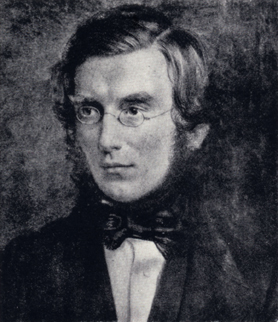
This plant's specific name commemorates Sir Joseph Hooker, who found it in the Himalayas and introduced it to British gardens in 1849. Joseph Dalton Hooker, one of the most eminent botanists and explorers of his day, laid the foundations for botanical biogeography and became Charles Darwin's closest friend and confidante, as well as serving as Director of the Royal Botanical Gardens, Kew for two decades.


Joseph Dalton Hooker


Sir Joseph Dalton Hooker has his own posthumous web site, created by Jim Endersby at the University of Sussex, for all those who appreciate the scientific achievements of one of the greatest of all botanists.

The generic name of this plant, Inula, has given its name to the carbohydrate inulin, which it stores in its roots instead of starch. Inulin - which is also present in Dahlia and Jerusalen artichoke tubers - has little effect on blood sugar levels and so is often used as a sweetener in foods for diabetics. Unfortunately - as anyone who has ever eaten significant quantities of Jerusalem artichoke will testify - it can generate acute attacks of flatulence for anyone who doesn't gradually add it to their diet.

Students often complain that Latin names are hard to remember. They're not when you decode them, when every name tells a story. Just remember to associate this flower with flatulence and Darwin's best mate and you'll never forget it...

Thursday, May 20, 2010

Dandelion, Taraxacum officinale


Even digital botanic gardens have weeds - in the case of mine, dandelions Taraxacum officinale agg. Dandelions are cosmopolitan weeds and long ago the European species was introduced into the United States, where it has become a major weed. Part of this plant's success can be attributed to its reproductive system, where it sets seed without the need for pollination, and its prolific seed production is coupled to an extremely effective wind-assisted seed dispersal mechanism. Back in 2007 two researchers at Purdue University in Indiana, Tamara McPeek and Xianzhong Wang, were curious to know how this plant might fare in future world where carbon dixide levels were double those of today - which is likely to occur around 2080. For the grandchildren of today's gardeners, their findings make ominous reading. The plants produced 83% more inflorescences and 32% more seeds that were larger, germinated better and established faster. Not only that, but they travelled further because their parachute of hairs (the pappus) was larger and carried the seeds further on the wind. Source: Tamara McPeek and Xianzhong Wang (2007) Reproduction of Dandelion (Taraxacum officinale) in a higher CO2 environment. WEED SCIENCE Volume: 55 Issue: 4 Pages: 334-340

Tuesday, February 9, 2010

Safflower Carthamnus tinctorius

Safflower Carthamnus tinctorius is a very ancient crop plant, cultivated at least since the time of the ancient Egyptians. The orange florets have been found sown into garlands of papyrus and cloth wrapped around the necks of mummies (including that of Tutankahmun) dated as early as 1600BC. Later the Egyptians learned to extract the dye from red- and orange-flowered varieties and used it to dye cloth, and together with indigo it remained an important dye up until the development of modern synthetic substitutes. The valuable edible oil content of safflower seed was probably discovered by the Romans. The crop has been cultivated for its oil in India for hundreds of years and by the end of the 19th. century it began to be grown elsewhere - including the United States - as a source of oil. A field crop of safflower in full bloom must be quite a sight. It develops deep roots quickly, so grows well on the falling water table in summer in Mediterranean climates and is relatively drought-tolerant. It produces two kinds of oil - polyunsaturates for soft margerines and salad oils and mono-unsaturates used for frying. More recently, ornamental varieties have been bred, not least because the florets retain their colour well when the flowers are dried - something that the ancient Egyptians discovered. The plant in the picture arrived in wild bird seed that I put out for birds in winter, and came up in the garden as a self-sown seedling.