You can subscribe to this blog

Showing posts with label Fabaceae. Show all posts

Sunday, November 24, 2013

Broad bean aka faba bean, Vicia faba, Fabaceae


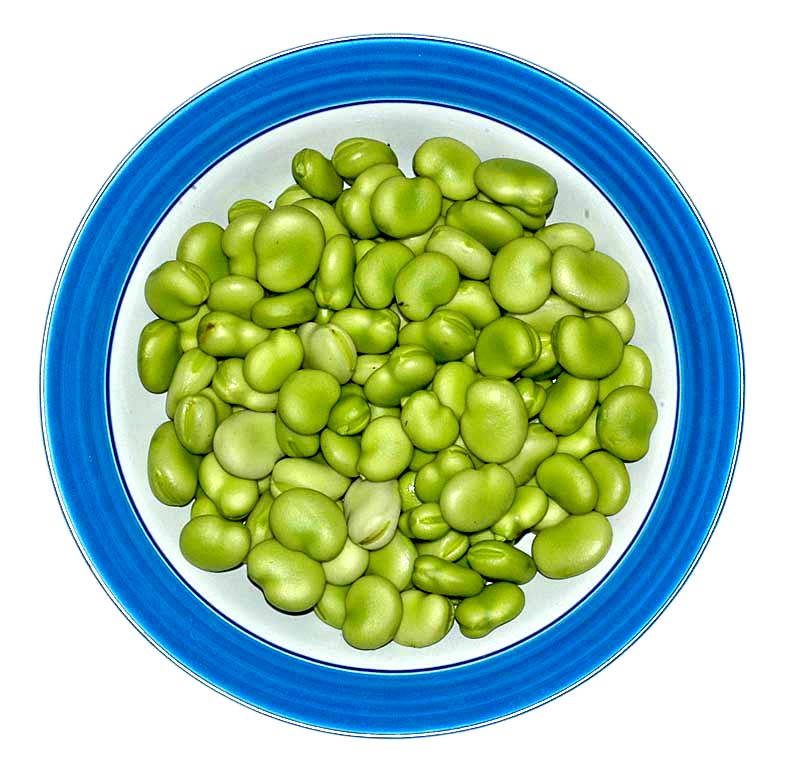
Few seeds have such a pleasing shape as freshly shelled broad beans and I cannot think of another vegetable crop which has such fragrant flowers. I spent several years of my professional career working on the reproductive biology of this crop, alongside plant breeders who were trying to breed higher yielding, more stable varieties.

Part of the secret of high yields is effective pollination. The crop has a strange breeding system, where some of the plants are capable of self pollination (so-called autofertiles) and others (known as autosteriles) require cross pollination by bees. Cross pollinated plants produce offspring capable of self pollination and offspring of self pollinated plants are autosteriles that require bee pollination, so the proportion of each type, and therefore the number of plants that need bees to pollinate their flowers, varies between generations - leading to fluctuating yields in successive crops. 

But always the key to a good yield is good pollination ...


......... and for that you need plenty of bumblebees, because honeybees aren't really robust enough to be effective pollinators.


The bumblebee needs to land on the keel petal and force it downwards to reach the pollen, and then extends its tongue to reach the  nectar which is at the back of the corolla tube. As it does so ....


.... the stigma and stamens are released from the keel petals that envelope them and pollen is transferred to the bee and broad bean stigma, so .......


....... flowers that have been well and truly bumblebee pollinated look like this after the bee moves on. That requires quite a lot of effort on the part of the bee ...


.... but bumblebees are smart and some learn to be nectar thieves, biting a hole in the corolla tube and using their long tongues to extract the nectar without tripping the flower.

Vicia faba flowers are exquisitely fragrant and to stand in a field of them in full bloom on a summer morning is a memorable experience.

There is quite a lot of flower colour variation in this species, with pure white flowers in some varieties and - more rarely - plants with purple or yellow wing petal spots. There's also considerable variation in seed size, from the small-seeded paucijuga types that are grown in North Africa, through the larger seeded equina 'horse beans' (aka field beans) that are grown for animal feed, to the large-seeded broad bean types that are grown as a vegetable.

Plant breeders only have the genetic variation within the cultivated crop to work with - Vicia faba is a cultigen, an ancient crop of unknown origin with no known wild populations. What's more, it will not cross with related wild Vicia species, so the pool of genetic variabilty that plant breeders have to their disposal is strictly limited.


Image source: http://en.wikipedia.org/wiki/File:Illustration_Vicia_faba1.jpg


Sunday, June 10, 2012

Lupin, Lupinus spp., Fabaceae


June is the peak month for lupin flowers, although they don't seem to be such popular border plants as they once were. 


We have a family connection with lupin growing because in the 1920s my grandmother worked in Drayton Manor nursery, near Chichester in West Sussex, that specialised in growing Lupinus polyphyllus as a cut flower. This is a photo from the nursery catalogue, although the lady isn't my grandmother. The fields of flowers must have looked spectacular and I can remember as a child seeing feral descendants of these plants growing on the edge of gravel pits where the nursery once stood, and seeing them in Gran's garden. The sweet peppery scent of their flowers always triggers recollections of these stately blooms, with bees working their way methodically around and up each flower spike before moving on to the next.


Lupinus polyphyllus, which is naturally blue-flowered, was introduced from North America by the plant collector David Douglas in the  1820s and soon became a popular subject for the herbaceous border, which it graced until the Yorkshire gardener George Russell decided to try to produce plants with denser flower spikes in a wider range of colours.


Beginning just before the First World War, Russell grew thousands of lupins on his allotment and ruthlessly eliminated any that he thought sub-standard, favouring bi-coloured forms with closely spaced whorls of flowers on the flower spike. By the late 1930s he'd produced his famous Russell lupin strain and with the help of nurseryman James Baker propagated the best forms commercially from cuttings. The plants were a sensation at the 1937 Royal Horticuultural Society Chelsea Flower Show and Russell, at the age of 79, became famous, receiving an MBE and the RHS Veitch Memorial Medal for his efforts. He lived on until 1951, dying at the age of 94. Plant breeders do seem to live to a grand old age; perhaps it's the determination to see how seedlings from last year's cross pollinations will perform.


Russell probably intercrossed L. polyphyllus with other species (possibly with tree lupin and the annual L. nootkatensis) although we can't be sure because no pedigrees of cross pollinations were kept. It seems likely that he probably let bees do the intercrossing for him.


For anyone with space enough to grow the plants, breeding lupins can be rewarding , as the seedlings flower in the year after sowing. Crossing involves carefully emasculating the flowers while they were still in bud, by carefully opening the buds and removing the stamens before they can shed pollen and then, after a delay while the flower develops and the stigma matures, cross pollinating the stigma with pollen from another individual, or even another species which may or may not produce a viable hybrid seed. 


Lupin flowers, like most legumes, have a distinctive and instantly recognisable flower morphology, with a prominent standard petal at the top and a folded keel petal, enveloping the stamens and the stigma, that's flanked by a wing petal on either side.


You can always spot a lupin flower that has been 'tripped' by visiting bees because their weight forces down the wing petals so the pointed tip of the keel petal protrudes.


During the bee's visit the keel petal is pushed downwards so the stigma at the tip of its long style is forced up through the end of the keel, sweeping a plug of pollen from the anthers before it and onto the underside of the bee. You can see the pollen as the yellow deposit on the tip of the keel petal and on the stigma in this photograph. 


Plentiful pollen makes lupin flowers very attractive to bumblebees, so emasculated, cross pollinated flowers need to be covered to keep bees away until seed has set.


The most interesting lupin species that I've grown is this one - Lupinus mutabilis. It's an annual that comes from South America, where it's known as tarwi and is said to have been cultivated as a food crop by the Incas. It's seeds have very high levels of protein (40%+) and lipid (20%+) but from the horticultural point of view it's the colour and fragrance of the flowers that appeal. It's easy enough to grow provided you don't attempt to transplant it. It never recovers from the slightest root disturbance, so you either need to raise it in pots as a conservatory plant or sow it in the garden where you want it to flower.

Thursday, May 19, 2011

Adam's Laburnum, +Laburnocytisus adami, Fabaceae

In 1825 a French nurseryman called Monsieur Adam grafted a purple-flowered specimen of broom Chamaecytisus purpureus onto a yellow laburnum Laburnum anagyroides stem, hoping to create the broom equivalent of a standard rose. Instead he created a strange graft chimaera - a tree with the tissues of both parents intermingled, that produces three different kinds of flowers.  The core of the tree is laburnum, sheathed in layers of broom cells, and the whole arrangement is unstable. In the picture above you can see what appears to be a broom bush sprouting from the branch of the tree, looking like an unusually colourful mistletoe.

This picture, and the one below, show the profusion of purple broom flowers on slender, pliable stems......


... and is probably quite close to what Adam had in mind when he started his experiment, except that he would have hoped to produce this head of flowers on top of a single straight stem.


The whole tree, which looks like a rather lax, poorly growing laburnum in general shape, produces a second form of inflorescence .....

.... that looks like a dangling salmon-pink laburnum blossom - a blend of flower colours of both parents.
Look closely and you can see a hint of laburnum yellow towards the rear of these flowers ....

... but higher up on the tree, amongst the pink blooms, it also produces occasional pure yellow, typical laburnum flowers....
... which you can see here.

This example, of what is a rather rare tree, is currently flowering in Durham University Botanic Garden

In graft hybrids like this the cells of both parents coexist as separate genetic entities in a single organism. You could, at least theoretically, extract cells of each component, put them through sterile tissue culture and recover the two original parents. A similar graft hybrid between hawthorn and medlar, +Crataegomespilus, has also been produced but is rarely found in collections. The + before the Latin name indicates that the plant is a blend of cells from two parents that maintain their independent genetic identity, rather than being the result of sexual hybridisation.

Grafting, which has been most often used in viticulture, fruit tree and rose production was once viewed by many as being a very unnatural practice, comparable with the way many view genetic engineering today. In his poem The Mower, Against Gardens, Andrew Marvell (1621-1678) wrote:

Another world was searched through oceans new,

To find the marvel of Peru;
And yet these rarities might be allowed
To man, that sovereign thing and proud, Had he not dealt between the bark and tree,
Forbidden mixtures there to see.
No plant now knew the stock from which it came ;
He grafts upon the wild the tame,
That the uncertain and adulterate fruit
Might put the palate in dispute.


Genetic engineering has yet to produce anything in the horticultural world that's as extraordinary as Adam's Laburnum.