You can subscribe to this blog

Showing posts with label Charles Darwin. Show all posts

Tuesday, May 10, 2011

Sundew, Drosera binata, Droseraceae

I've had this specimen of fork-leaved sundew Drosera binata for about a decade and it now fills a 10 inch pot and carries about 200 sticky-tentacled leaves. It's a death-trap for flies and would be quite capable of catching bumblebees if it had access to them.

Sundews face a dilemma - the need to capture and digest flies to supplement the meagre supplies of nitrogen in the soils in which they grow, while simultaneously using the services of insects to pollinate their flowers. The solution, as in many insectivorous plants, is to separate flowers and lethal leaves with a long flower stalk. It works pretty well in this case - the plant always sets plenty of dust-like seeds that germinate easily in surrounding flower pots in the conservatory, provided their soil surface is wet.


I particularly like the way the forked leaves unfurl - it's a bit like rolling out a deadly red carpet for passing insects ....


... and there is an air of menace about it in the final stages - like raised arms with clenched fists.  The common name of the plant is especially apt - it looks stunning when it catches the first rays of sun in the morning, when all those drops of mucilage sparkle like dew-drops.


Sundews were amongst Charles Darwin's favourite plants and he experimented with them in great detail, demonstrating that they released digestive enzymes when presented with animal protein (egg albumen in his experiments).

He noted that when a few tentacles captured a fly the surrounding ones responded by curling towards and then over it, often followed by the whole leaf folding over the prey, creating what he referred to as a 'vegetable stomach'. You can see how some of the longer hairs are curling towards this fly within a couple of minutes of it becoming stuck.

Each sticky-tipped hair is a complex strucure, with a glandular head that secretes mucilage (which is remarkably resistant to being washed away) and then enzymes that digest the prey after it dies of exhaustion during its struggle to escape. The products of digestion are transported down the stalk to the leaf in a double layer of cells in the hair stalk that pass the digestion products from cell to cell.

Darwin's book Insectivorous Plants contains detailed accounts of his experiments with this plant and can be downloaded here.

Saturday, February 19, 2011

Primrose, Primula vulgaris, Primulaceae

With the possible exception of the bluebell, the primrose Primula vulgaris is probably Britain's most popular spring flower. Even now, on a freezing mid-February day, new leaves and flower buds are beginning to form in primroses in woodlands here in north-east England.  Primroses have been grown in gardens for centuries - probably since people first cultivated gardens - giving rise to numerous varieties and, through hybridisation with cowslips, the garden polyanthus. The primrose also excited Charles Darwin's curiosity, in his struggle to understand and define the nature of species. Like many before him, he was aware that ...


........ primroses, with their large single flowers, grew along woodland edges and hedgebanks....


... while cowslips, with their numerous small flowers on a common stalk, grew in pastures, but...

... wherever the two coincided they hybridised to produce false oxlips, with large flowers on a common stalk. Although every field guide to wild flowers describes primroses and cowslips as distinct species, in evolutionary terms they are really one - a genetically diverse species with a wide range of variation which, at its extremes, produces distinctive plants that are adapted to life in woodlands or grasslands. Primroses and cowslips are on the way to becoming two separate species, where they would satisfy the modern evolutionary biologist's absolute definition of a species, based on an inability to interbreed with other related species, but they haven't reached that point yet. No wonder this example of evolution-in-progress attracted Darwin's inquiring eye.

Ever since primroses and the primrose-cowslip false oxlips hybrids were introduced into gardens they have been exchanging their genes with other cultivated Primula species from the European mainland, introducing new flower colour genes that give us the range of brilliant hues that are available in garden centres today. Sometimes the gene exchange extends beyond the garden and back into the wild - as, for example, in the primrose you can see here.

Darwin was fascinated by primroses for another reason. His Cambridge University botany teacher and mentor, John Stevens Henslow, drew his attention to the fact that there are two kinds of flowers in any wild population of primroses...


....so-called pin-eyed flowers, with the stigma at the end of a long style, level with the top of the corolla tube...


... and with the stamens located way down in the corolla tube, as you can see in this sectioned flower...


... and thrum-eyed flowers, like this, where the stamens are at the top of the corolla tube...

... and where the stigma, at the end of a much shorter style, is located way down in the corolla tube.

The presence of two forms of flowers in the population is known as heterostyly and Darwin made numerous self- and cross-pollinations between the two forms, demonstrating that self-pollination failed and that crossing beween the two forms was necessary for seed set, and also that the differential placement of the stigma and stamens in the two forms aided cross pollination between them by insects. In his autobiography he remarked "No little discovery of mine ever gave me so much pleasure as the making out of the meaning of heterostyled flowers"

The two forms were illustrated in diagrammatic form in this publication: Darwin, C. R. 1862. On the two forms, or dimorphic condition, in the species of Primula, and on their remarkable sexual relations. [Read 21 November 1861] Journal of the Proceedings of the Linnean Society of London (Botany) 6: 77-96.

The scientific study of this floral arrangement has yet to run its course and, 150 years after Darwin first described the mechanism, the genes that control the development of the two primrose flower types are currently under investigation by Professor Phil Gilmartin at Durham University.

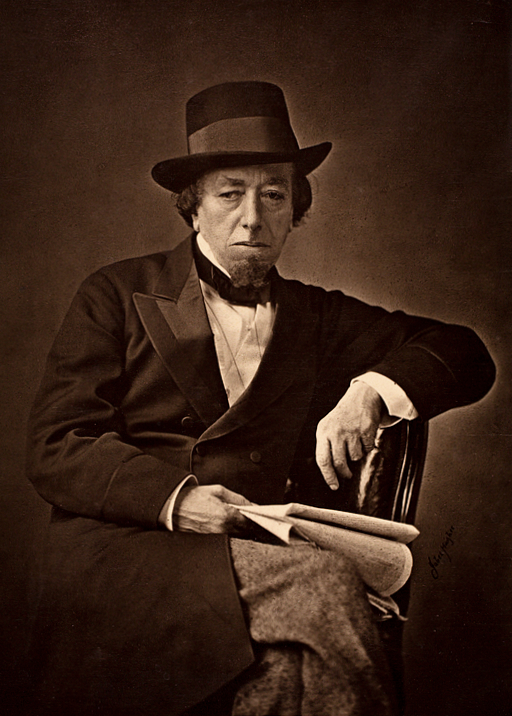
Darwin wasn't the only eminent Victorian to be beguiled by this flower. Primroses were the favourite flower of Benjamin Disraeli, Prime Minister in two Conservative governments during Queen Victoria's reign. Such was her affection for him that she sent a wreath of primroses to his funeral on 19th. April 1881. Thereafter that date was celebrated annually as Primrose Day.