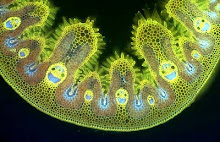
I like a nice cup of cacoa - and this is where it comes from. This is the flower of cacao, Theobroma cacao, source of chocolate. These flowers - only about a centimetre across - are pollinated by small insects - notably midges - and then the cacao pod develops (see below).

The tiny cacao flowers are produced in large numbers and are unusual in that they sprout directly from the bark of the tree - a botanical trait known as cauliflory. The plant was formerly classified in the family in the family Sterculiaceae but more recent systematic research has reclassified it as a member of the mallow family. It originates from the foothills of the equatorial Andes and is thought to have been first domesticated 3000 years ago in Central America, where it became the sacred beverage plant of the Mayans, who believed it was a gift from the gods - a historical link commemorated in the Latin name that Linnaeus bestowed on the plant - Theobroma literally means 'food of the gods'. The Aztecs used cacao beans as a form of currency.

To produce chocolate the cacao pods are split open and the seeds are extracted from the pulp, then allowed to ferment for several days and then roasted (when the chocolate flavour develops), then ground into a powder. The highest-valued Criollo cacao has relatively low levels of bitter substances but cacoa powder is usually mixed with milk to offset the bitterness. About 3.7 million tons are produced annually to satisfy chocaholic cravings, much of it in West Africa, but about 30 per cent of the crop is lost to pests and diseases. It's hoped that the recent sequencing of the cacao genome will speed-up the selection of disease resistant varieties.

This gent - Sir Hans Sloane, 1660-1753, commemorated with this statue in Chelsea Physic Garden , of which he was patron - is credited with bringing cacao to Britain from Jamaica. Sloane was a physician and was interested in its medicinal properties but found that it was far more palatable if mixed with milk, inventing a patented recipe for milk chocolate that was eventually acquired by Cadbury. The original Cadbury's chocolate wrappers carried the inscription Sir Hans Sloane's Milk Chocolate prepared after the original recipe.

Sloane's belief in the medicinal properties of chocolate have been echoed for over a century in this illustration on the tin of Droste's cacao, a Dutch brand - where a nurse is shown delivering the drink to the patient. Notice how the image on the tin is repeated in the tin she is carrying on her tray - this cunning advertising image reinforcement, of an advert within an advert, has become known as the Droste Effect.